Achieving a well-developed, symmetrical chest requires targeted mechanical tension on the clavicular head of the pectoralis major, commonly known as the upper chest. Electromyography (EMG) studies consistently show that flat variations often default to sternal head dominance.
To maximize muscle architecture variations in the upper thorax, the incline dumbbell press serves as a premier movement—provided it is executed with scientific precision regarding bench angles and structural alignment.
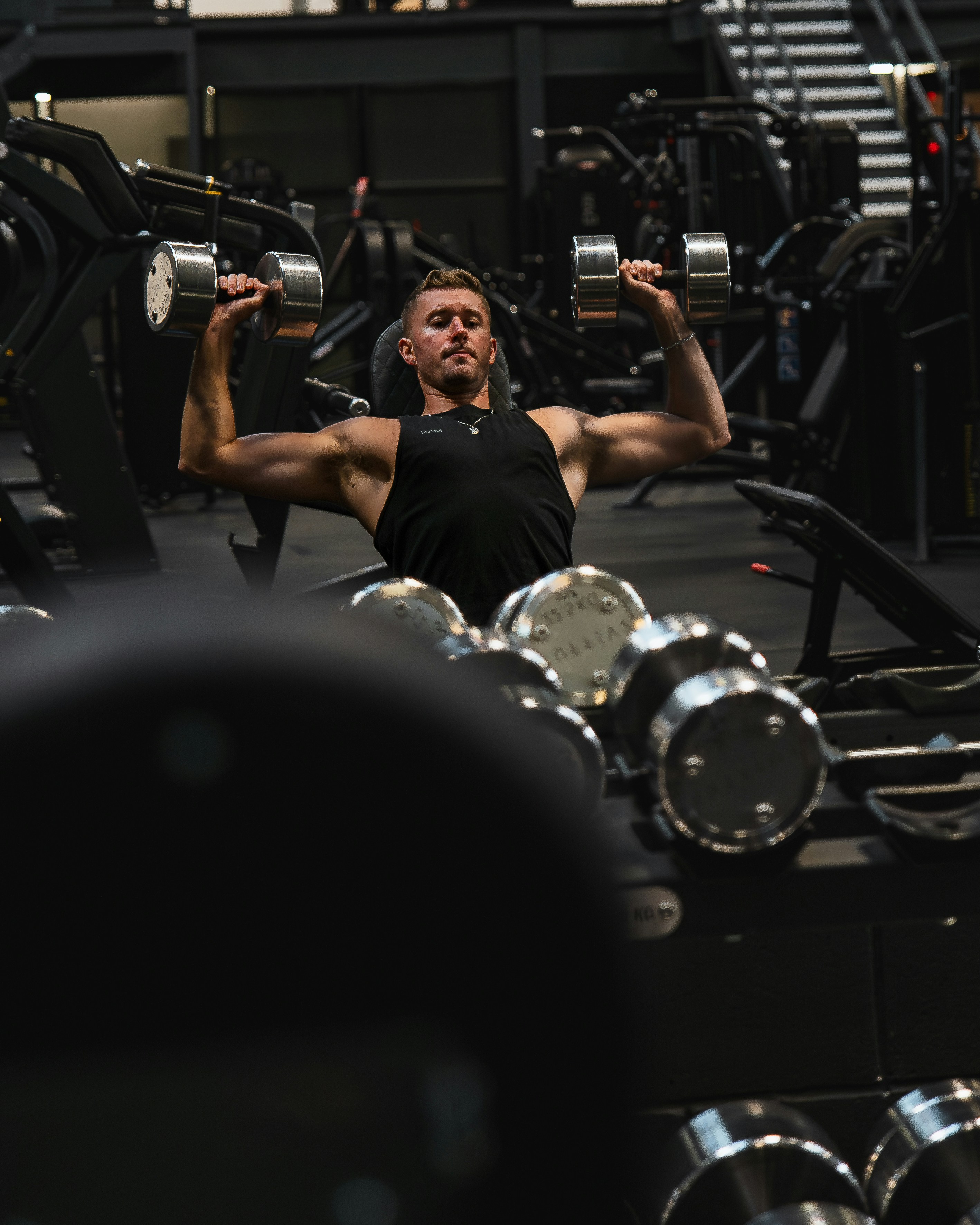
1. The Optimal Bench Angle: The 30-Degree Scientific Threshold
A prevalent error in commercial gyms is setting the incline bench too high, often at 45 degrees or greater. Kinetic and kinematic research demonstrates that as the bench angle increases beyond a specific threshold, the mechanical tension shifts drastically away from the upper chest and onto the anterior deltoids (front shoulders).
According to empirical data, the optimal bench angle for maximizing clavicular head activation while minimizing anterior deltoid takeover is approximately 30 degrees.
At this precise angle, the orientation of the fibers of the upper pectoralis aligns perfectly with the vertical line of resistance. Adjusting your bench to a lower incline ensures that the heavy mechanical load is directly absorbed by the target chest fibers, fostering superior muscular micro-tears necessary for hypertrophy.
2. Tonal Path and Scapular Biomechanics
To safeguard the glenohumeral (shoulder) joint and isolate the upper chest, the shoulder blades must remain fixed throughout the entire movement duration. Lifters must maintain a strict posture of Scapular Retraction and Depression—effectively pressing the shoulder blades together and driving them down toward the hips.
Allowing the shoulders to protract (round forward) at the top of the press shifts the load entirely onto the joints and rotator cuffs, increasing impingement risk.
Furthermore, the path of the dumbbells should follow a slight natural arc rather than a rigid vertical line. At the bottom eccentric phase, the elbows should be tucked at roughly a 45-to-60-degree angle relative to the torso. As you drive into the concentric phase, bring the dumbbells together over the upper chest without letting them touch, maintaining constant internal muscular tension.
3. Dumbbells vs. Barbells: The Hypertrophy Advantage
Exercise science frequently highlights the mechanical advantages of dumbbells over barbells for muscle hypertrophy. The fixed nature of a barbell limits the hands to a rigid horizontal plane, which can restrict the natural convergent path of the pectoralis major.
Dumbbells allow for a freer convergent movement path, meaning the hands can move slightly outward at the bottom for an intense stretch and move inward at the top for peak contraction.
Additionally, the increased stabilization required to balance two independent loads recruits a higher percentage of stabilizer muscles and deep motor units. This amplified motor unit recruitment, combined with an extended range of motion at the bottom stretch phase, directly correlates with accelerated rates of protein synthesis and upper chest mass growth.
Conclusion: Engineering an Elite Upper Torso
In conclusion, constructing a powerful upper chest requires moving past arbitrary lifting styles and utilizing evidence-based biomechanics. By locking your bench at a strict 30-degree angle, maintaining absolute scapular stability, and leveraging the superior freedom of motion offered by dumbbells, you optimize the pathway for clavicular head growth. Implement these parameters into your training split to achieve safe, maximum mechanical tension.
References
Lauver, J. D., et al. (2016). Influence of bench angle on upper extremity muscular activation during bench press exercise. European Journal of Sport Science, 16(3), 309-316. (This landmark study provides direct EMG verification that a lower 30-degree incline yields optimal clavicular head recruitment compared to higher angles).
Saeterbakken, A. H., & Fimland, M. S. (2013). Effects of injury history and barbell vs. dumbbell training on chest muscle activation. Journal of Strength and Conditioning Research, 27(12), 3457-3464. (Demonstrates the superior motor unit activation and freedom of movement achieved via dumbbell pressing variants versus fixed barbell pathways).
Glass, S. C., & Armstrong, T. (1997). Electromyographical activity of the pectoralis major during incline and decline bench presses. Journal of Strength and Conditioning Research, 11(3), 163-167. (Analyzes the specific load vectors and directional fiber activation patterns within the sternal and clavicular heads under altered incline mechanics).


